Dubai dress code for tourists: what to wear, place by place
What tourists can wear in Dubai in 2026: malls, souks, beaches, pools, restaurants and the desert, plus the official mosque dress codes in Dubai and Abu Dhabi.

In short
- Dubai has no legal dress code for visitors, and Visit Dubai says women are not required to follow any specific guidance on what to wear.
- Swimwear is fine at beaches, pools and waterparks, but not in malls, business districts or out on the street.
- In malls, museums and heritage areas, outfits that cover shoulders and knees are appreciated; shorts are allowed, ideally reaching the knee in malls.
- Mosques have firm rules: at the Sheikh Zayed Grand Mosque, women need loose clothing to the ankles, sleeves to the wrists and full hair cover.
- Jumeirah Mosque in Dubai asks for modest dress and can provide a head cover, abaya or kandoora for its guided visits.
Contents 13 sections
- Is there a dress code for tourists in Dubai?
- What should you wear in Dubai’s malls?
- What can you wear at beaches, pools and beach clubs?
- What should you wear in the souks and Old Dubai?
- What should you wear to restaurants, bars and brunches?
- What is the dress code at Jumeirah Mosque?
- What is the dress code at the Sheikh Zayed Grand Mosque?
- What should you wear in the desert?
- Does the dress code change during Ramadan?
- What should you pack?
- Book it with us
- Questions
- Sources
Is there a dress code for tourists in Dubai?
There is no legal dress code for visitors in Dubai. Visit Dubai, the city’s official tourism site, says there are no restrictions on what visitors wear and that women are not required to follow any specific guidance (Visit Dubai). What exists instead is a set of expectations that change with the place.
Three rules cover almost every situation:
- Swimwear stays at the water. It is fine at beaches, pools, waterparks and spas, and out of place in malls and business districts.
- Cover shoulders and knees in shared indoor and heritage spaces. Visit Dubai says this is appreciated in malls, museums, government buildings and the historic neighbourhoods.
- Mosques have real rules. Expect to cover arms and legs, and for women to cover their hair.
| Place | What’s expected | Who says so |
|---|---|---|
| Beach, pool, waterpark | Swimwear is fine; cover up when you leave | Visit Dubai |
| Malls | Shoulders and knees covered is appreciated; no swimwear | Visit Dubai |
| Souks and Old Dubai | Conservative dress is appreciated | Visit Dubai |
| Restaurants and bars | No legal code; venues may ask for smart dress | Venue policy |
| Jumeirah Mosque | Modest dress; women bring a head cover | Jumeirah Mosque |
| Sheikh Zayed Grand Mosque | Women: ankles, wrists and hair covered; men: legs covered | Sheikh Zayed Grand Mosque Centre |
| Desert | Practical clothes for sun, sand and cool winter evenings | Weather data from NCM |
Checked 2 November 2026.
What should you wear in Dubai’s malls?
Wear what you’d wear to a city centre at home, with shoulders and knees covered. Visit Dubai’s FAQ says shorts are allowed, but in enclosed public areas such as malls tourists are asked to respect the local culture by keeping their legs covered to below the knee. It also says a bikini is fine on the beach but not in a mall.
In practice, a T-shirt with knee-length shorts, a skirt or light trousers is right for Dubai Mall or Mall of the Emirates. Strappy tops and very short shorts or skirts are the things to leave at the hotel. Malls are heavily air-conditioned, so a light layer is useful anyway.
What can you wear at beaches, pools and beach clubs?
Swimwear, including a bikini, is fine at public beaches, hotel beaches, pools, waterparks and spas. Visit Dubai says swimwear is permissible in all of those places, and its FAQ says wearing a bikini on the beach is “perfectly fine”.
The line is where the beach ends. Visit Dubai says swimwear isn’t appropriate in public areas away from the beach, so pack a cover-up, a shirt or a sundress for the walk to a café, a taxi or the hotel lobby. Some public beaches, such as Al Mamzar Beach Park, also run ladies’ days when access is limited to women and children.
What should you wear in the souks and Old Dubai?
Dress a little more conservatively in the old town. Visit Dubai says conservative dress is appreciated in Dubai’s historic neighbourhoods, such as Al Fahidi and the streets around the gold and spice souks. Clothes that cover your shoulders and knees are the safe choice, and loose, light fabrics are the comfortable one in the heat.
Wear comfortable flat shoes or sturdy sandals: you’ll do a lot of walking, and step on and off abras to cross the creek. A hat and sunglasses help, since many of the lanes are open to the sky. If you’re doing Old Dubai with a guide, the half-day city tour covers the souks, the creek and an abra ride in one morning.
What should you wear to restaurants, bars and brunches?
There is no official dress code, so it comes down to the venue. Casual cafés and restaurants are relaxed, while hotel restaurants, rooftop bars and nightclubs may set their own smart or smart-casual policy. Visit Dubai says smarter clothes will come in handy if you plan to explore the nightlife.
Check the venue’s website or booking confirmation before you go, especially for evenings out, and keep beachwear for the beach club itself.
What is the dress code at Jumeirah Mosque?
Jumeirah Mosque asks visitors for modest dress, and women should bring their own head cover. The mosque’s official site says a head cover, abaya and kandoora are also available if you need them. Guided visits run daily except Friday at 10am and 2pm, with registration opening 30 minutes before each visit and no booking needed.
For mosques in general, Visit Dubai says clothing should cover the shoulders, arms and legs, with headscarves for women. Long sleeves with long trousers or a long skirt, in a fabric that isn’t tight or see-through, meets that.
What is the dress code at the Sheikh Zayed Grand Mosque?
The Sheikh Zayed Grand Mosque in Abu Dhabi has the strictest written dress code you’re likely to meet on a UAE trip. Its official rules say:
- Women: clothing must be loose and reach the ankles, sleeves must reach the wrists, and hair must be fully covered.
- Men: any attire is allowed, but clothes that cover the legs fully are preferred, and sleeveless, tight or see-through shirts should be avoided.
- Everyone: no transparent, tight or revealing clothes, and no slogans or inappropriate drawings. The mosque also asks visitors to avoid excessive jewellery, heavy make-up and very bright colours.
The official rules don’t mention lending clothes, so arrive already dressed for it. The Sheikh Zayed Grand Mosque guide covers tickets and timings, and the Grand Mosque tour includes a private transfer and a guide.
What should you wear in the desert?
Wear loose, light clothes that cover your shoulders, plus a layer for the evening. There is no dress code at desert camps, but the sun is strong and winter evenings are cool: the UAE’s National Center of Meteorology puts January’s average low at 13.7°C. A scarf keeps sand out of your face, sunglasses help on the dunes, and sandals or trainers you don’t mind filling with sand are better than smart shoes.
The what to wear on a desert safari guide goes into more detail, season by season. If you’re booking a private evening safari, bring the layer: you’ll be out until after dark.
Does the dress code change during Ramadan?
Not officially. Visit Dubai says that during Ramadan all attire is generally acceptable, as long as you dress appropriately for the occasion and the location, and that beachwear is acceptable at hotel beaches and pools (Visit Dubai). It’s still a good month to lean towards covered shoulders and knees in malls, souks and heritage areas. The Ramadan in Dubai for tourists guide covers the rest of the month’s etiquette.
What should you pack?
A short list covers a week in Dubai at any time of year:
- Swimwear and a cover-up for the beach and pool.
- Knee-length shorts, light trousers or a midi skirt for malls and the old town.
- T-shirts or light shirts that cover the shoulders.
- One long-sleeved top and long trousers or a long skirt for a mosque visit, plus a scarf if you’re a woman.
- A light jumper or jacket for winter evenings and air-conditioned malls.
- Sunglasses, a hat and comfortable walking shoes.
For the rest of your planning, the Dubai travel tips hub covers visas, money, transport and the weekend.
Book it with us
Private, with hotel pickup, instant confirmation and free cancellation up to 48 hours before.
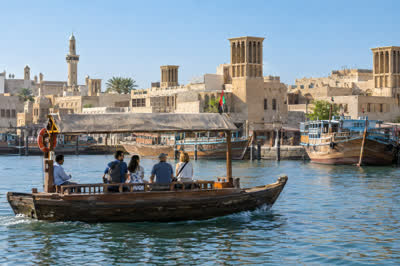 Dubai City Tour and Dinner CruiseOld Dubai, the souks and an abra ride by day, a dhow dinner cruise by night.From $33 per person
 Abu Dhabi City TourThe Sheikh Zayed Grand Mosque, Emirates Palace and Heritage Village with a private guide.From $30 per person
 Desert Safari DubaiEvening, kids-friendly, candlelight dinner and morning safaris in your own Land Cruiser.From $109
Questions
Can I wear shorts in Dubai?
Yes. Visit Dubai says shorts are allowed for women and men. In enclosed public places such as malls, it asks tourists to respect the local culture by keeping their legs covered to below the knee, so longer shorts or trousers are the better choice there. At a mosque or other religious site you’ll need clothing that covers your legs and shoulders. At the beach or pool, wear what you like.
Do women have to cover their hair in Dubai?
No. Visit Dubai says women are not obliged to wear a headscarf in Dubai, although some choose to for religious or cultural reasons. The exception is a mosque, where women are asked to cover their hair as well as their shoulders and knees. Jumeirah Mosque can provide a head cover for its guided visits, but it’s easier to bring a light scarf of your own.
Can you wear a bikini in Dubai?
Yes, at the beach, a pool, a waterpark or a beach club. Visit Dubai says wearing a bikini on the beach is perfectly fine, but not in public spaces such as malls, and that swimwear isn’t appropriate in business districts. Bring a cover-up or something to change into for the walk to a café, a taxi or the hotel lobby, where swimwear is out of place.
What should I wear to the Sheikh Zayed Grand Mosque?
The mosque’s own dress code says women should wear loose clothing that reaches the ankles, sleeves to the wrists and full hair cover. Men may wear any attire but are asked to cover their legs fully and avoid sleeveless, tight or see-through tops. Everyone should avoid transparent or revealing clothes and slogans or inappropriate drawings. The official rules don’t mention lending clothes, so arrive already dressed for the visit.
Is there a stricter dress code during Ramadan?
Not as a rule. Visit Dubai says all attire is generally acceptable during Ramadan, as long as you dress appropriately for the occasion and the place, and that beachwear is acceptable at hotel beaches and pools. In practice, Ramadan is a good time to lean towards covered shoulders and knees in malls, souks and heritage areas, where more people around you are fasting and praying.
What should men wear in Dubai?
The same principles apply to men as to women. Swimwear and bare chests belong at the beach or pool, and covering shoulders and knees is appreciated in malls, museums and heritage areas. Shorts are fine in most places. For a mosque visit, wear long trousers and avoid sleeveless, tight or see-through tops. Smart casual clothes suit most restaurants and bars.
Sources
7 sources, checked 2 November 2026
- Practical information: what to wear (Visit Dubai) visitdubai.com
- Dubai FAQs: life in Dubai and Ramadan (Visit Dubai) visitdubai.com
- Travelling as a solo female in Dubai, December 2025 (Visit Dubai) visitdubai.com
- Mosque manners: visitor dress code and rules (Sheikh Zayed Grand Mosque Centre) szgmc.gov.ae
- Jumeirah Mosque guided visits (Sheikh Mohammed Bin Rashid Al Maktoum Centre for Cultural Understanding) jumeirahmosque.ae
- Guide to Ramadan 2026 in Dubai (Visit Dubai) visitdubai.com
- Dubai climatological information, 1974–1991 averages from the UAE National Center of Meteorology (World Weather Information Service) worldweather.wmo.int
Prices and opening hours change; seen something out of date? Tell us atsupport@yalladunes.com.
Keep reading

Best time to visit Dubai: weather, crowds and events by month
When to visit Dubai: official air and sea temperatures month by month, high and low season, 2026–27 events, Ramadan 2027 and what summer is really like.
Getting around Dubai: metro, taxis, nol cards and fares in 2026
How to get around Dubai in 2026: metro lines and hours, nol cards and RTA fares, taxi fares, Careem and Uber, the tram, abras, driving and airport transfers.
Ramadan in Dubai for tourists: 2027 dates, rules and etiquette
Visiting Dubai in Ramadan 2027? The expected dates, what official sources say about eating in public, opening hours, iftar, desert safaris and etiquette.